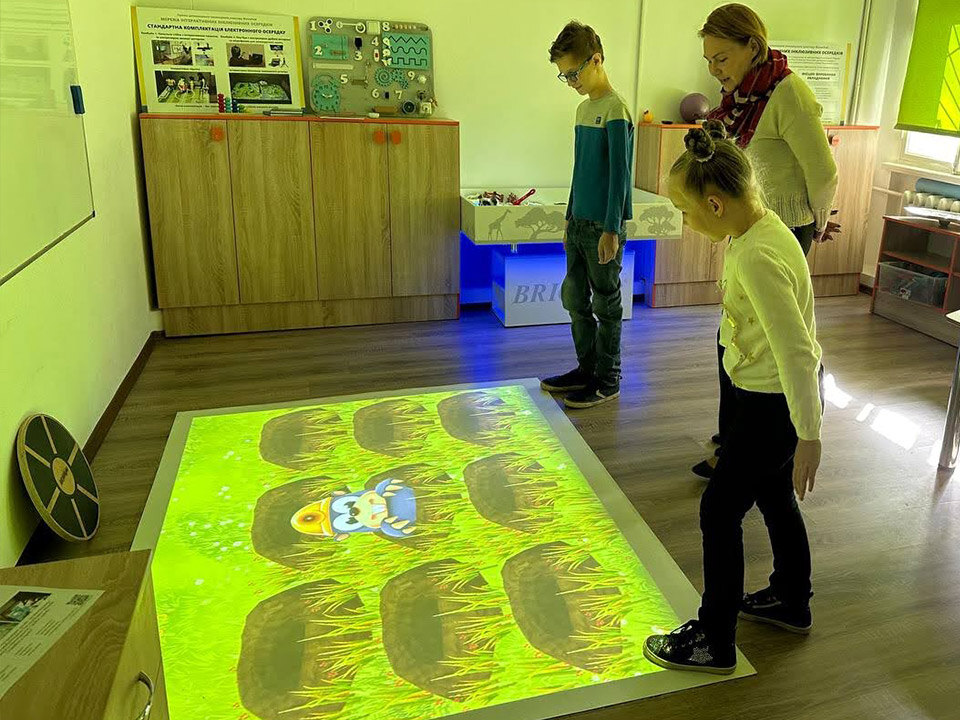
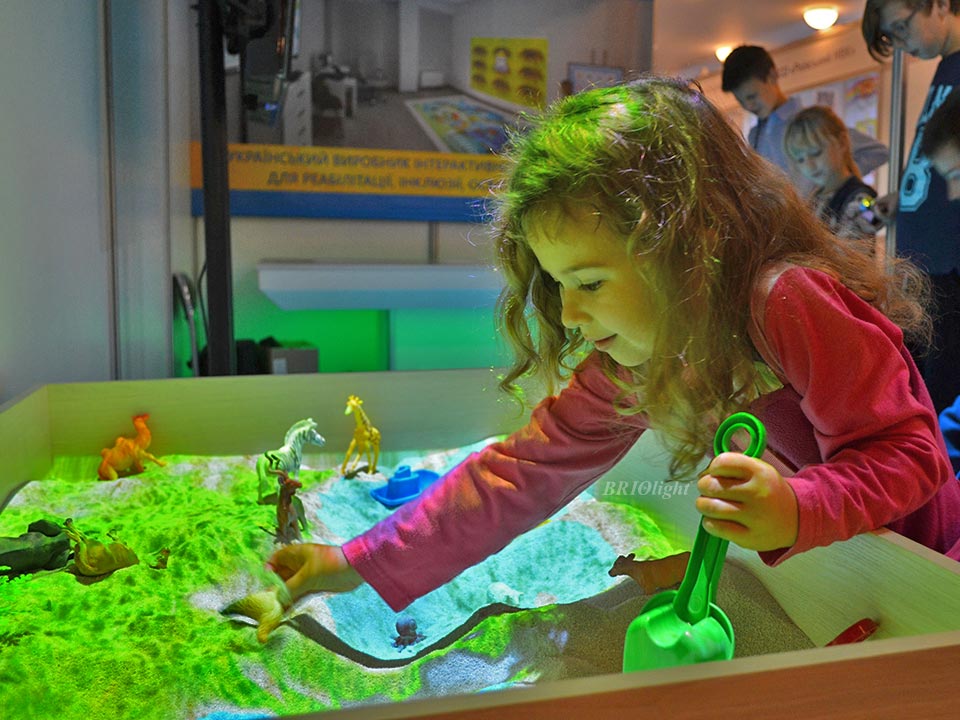
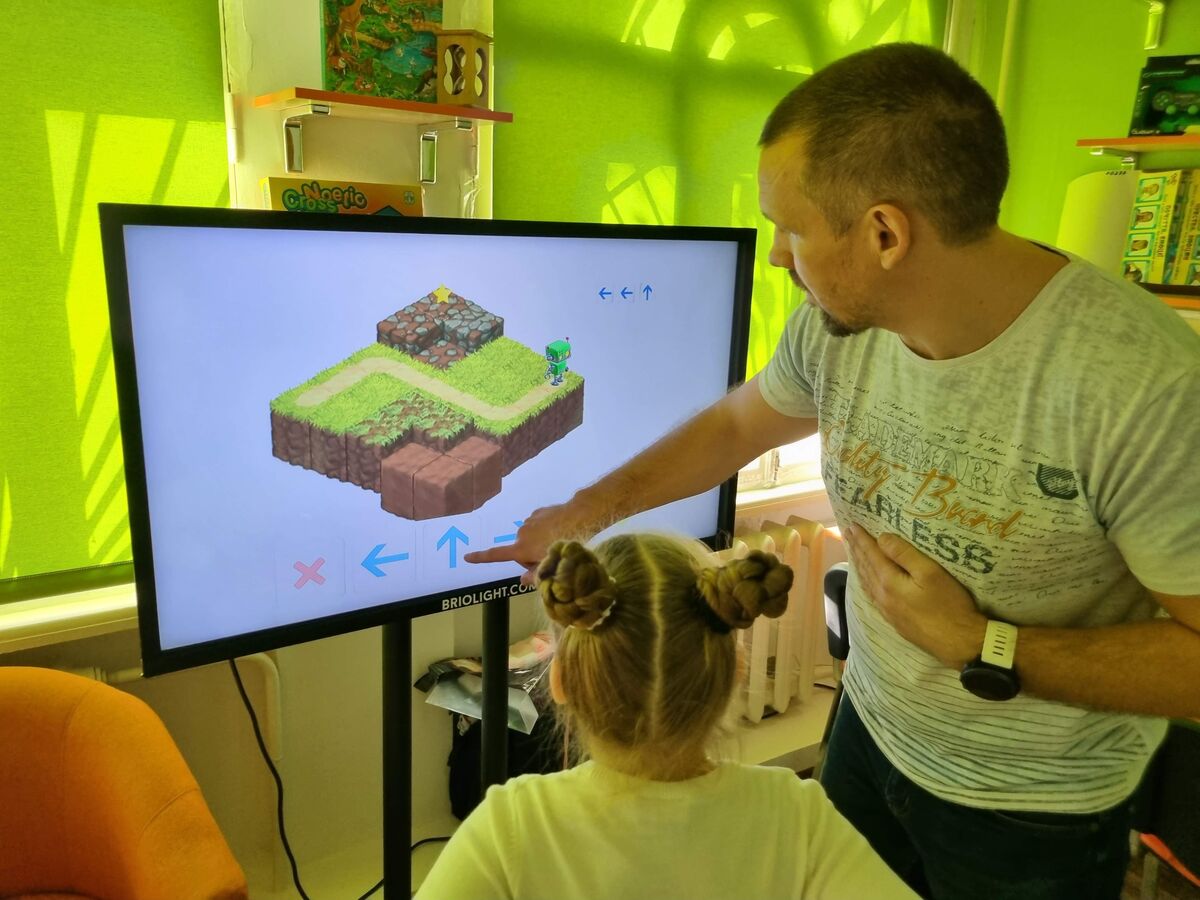
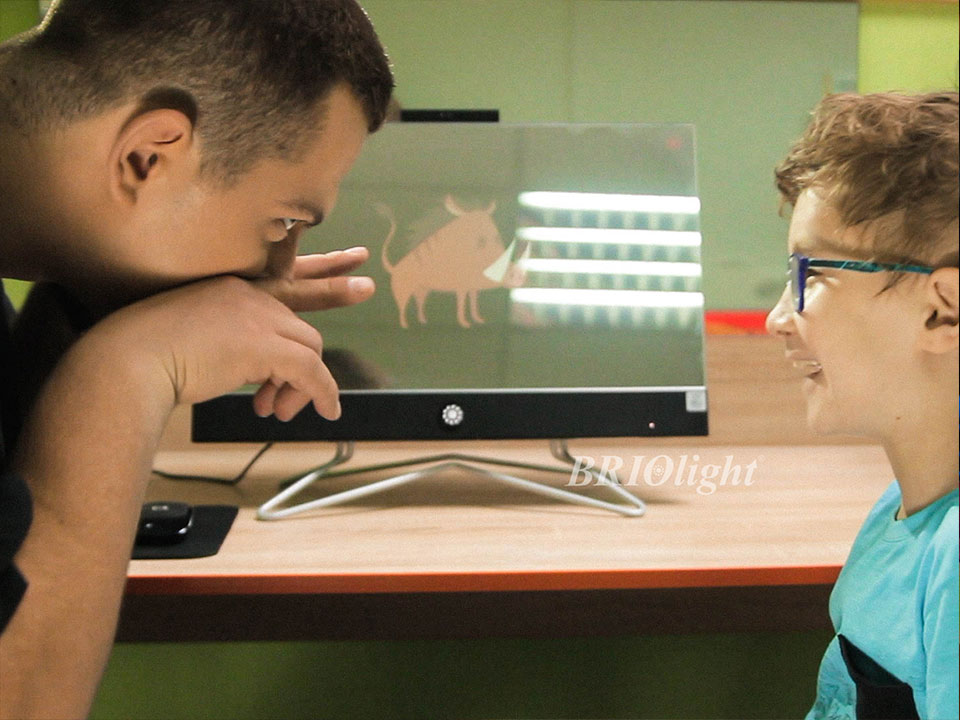
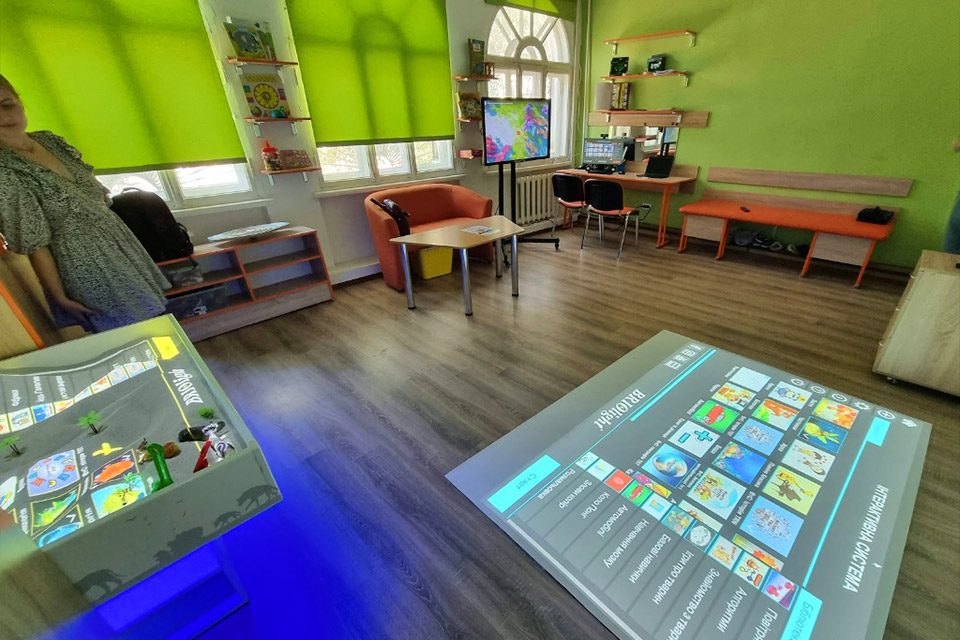
Play-based activities can positively influence many psychological processes. To help psychologists apply playful methods in work with children, Briolight has developed an interactive equipment system that includes a projection floor, augmented-reality sandbox, multi-touch panel, developmental table, interactive mirror with audio and video recording, and other equipment.
Briolight equipment provides psychologists with visual and practical materials for activities with children. The floor, panel and sandbox can connect to the internet when access is available, allowing specialists to demonstrate files from cloud storage, YouTube videos, photographs, audio and other resources. The panel can also run applications from Google Play, including educational games, assessment materials, psychological questionnaires and practical exercises.
Children can complete psychological activities by interacting directly with the display, moving on the floor or playing with sand.
Briolight interactive technologies allow psychologists to create varied activity scenarios using different forms of digital interaction.
Sessions can be organised individually or in groups. A standard sandbox accommodates up to six children around it; a similar number can participate in team activities on the interactive floor. For panel activities, we generally recommend no more than three children at one time.
Such collaborative formats can be engaging because children complete tasks through their own actions and experience positive emotions, which may support the learning process.
Psychologists working with children often encounter difficulties related to high activity levels, low motivation, limited self-control or organisation. Briolight tools are designed to help create conditions for participation in sessions for children experiencing these challenges. Bright visual materials and practical interaction can help focus attention and motivate children to participate.
Areas that can be addressed with Briolight interactive equipment:
1. Gross and fine motor skills: practising movement planning and visual-motor coordination.
2. Perception: recognising pictures and characteristic sounds, selecting objects on verbal instruction (for example “find”, “where”, “show” or “find the same one”), identifying parts of a whole, and recognising colours and shapes.
3. Memory: remembering images and objects, repeating sounds, words, phrases and sentences.
4. Language: comprehension and spoken expression.
5. Sensory and early mathematical concepts: recognising sensory properties and developing basic mathematical ideas.
After a session, psychologists may use the panel to present questionnaires, text-based methods, practical tasks and visual assessment materials without needing additional paper handouts or stationery. The selection and interpretation of assessments remain the specialist's responsibility.
Overall, interactive activities can create positive learning experiences, offer changes of pace, support interest in sessions and help specialists manage the structure of activities.
Further benefits for psychologists:
- Bright visual content attracts attention and provides material for practising visual memory and thinking.
- Presentation tools can display stories, psychologically oriented film clips and the specialist's own materials.
- Alternating mental and movement activities makes it possible to include relaxation with visual or audio accompaniment.
- Professional tools help structure purposeful sessions.
- A large library of activities covering different topics and difficulty levels, with “Filter” and “Session Generator” features to help select materials.
- Difficulty levels (easy, normal and hard) and individual settings based on the child's age, needs and intended activity.
- Individual folders for learners and groups with specialist-defined settings that reduce preparation time.
The design of each interactive session depends on the child's age, physiological characteristics and individual support needs. Interactive activities are normally one component of a broader, professionally guided session.