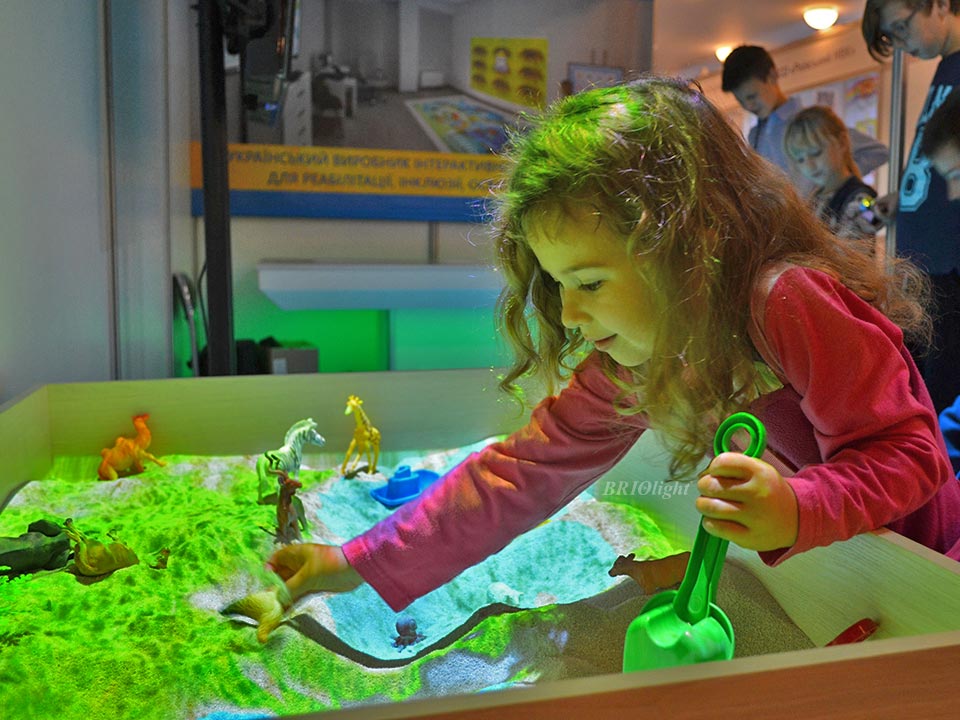
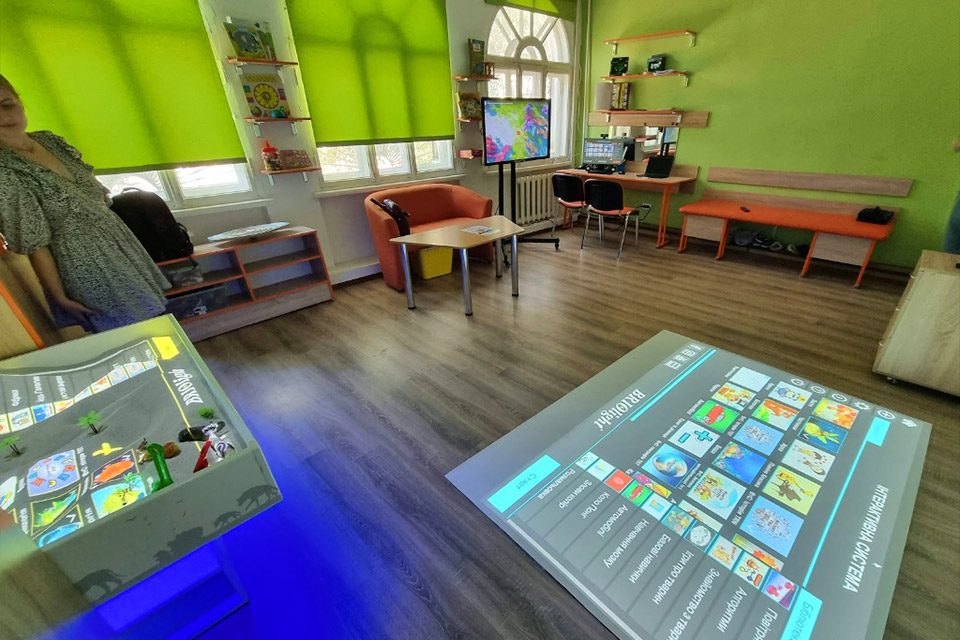
The interactive sandbox can be used by teachers, psychologists and specialists as part of planned educational or support activities. Sand play provides a small, changeable environment for exploration, storytelling and sensory interaction.
Briolight software includes universal activities shared with other platforms and sandbox-specific effects. Universal tasks may involve choosing pictures, solving simple logic problems and practising learned concepts. Special effects react to the landscape shaped in the sand.
For example, a city-building activity can distinguish between water, mountains and land suitable for buildings, prompting children to consider where to place objects and how to tell a story about their city.
1. Create a welcoming atmosphere. Avoid criticism of creative choices and let the child explore ideas safely.
2. Use storytelling. Introduce characters, imaginative scenarios or rhymes to give activities context and invite participation.
3. Adjust difficulty. The historical software offered easy, normal and difficult levels in some activities. Choose a level appropriate for each child and check what controls exist in the installed version.
4. Make concepts visible. Form letters, shapes, landscapes or continents and connect the tactile activity with discussion and learning.
5. Discuss feelings sensitively. With a qualified practitioner, symbolic play can support conversations about fears or conflict. The sand scene itself must not be treated as a diagnostic test.
A case shared by Odesa psychologist Yuliia Rudomanenko described two brothers initially dividing their sand worlds with a river and later building a bridge together. In the story, the bridge became a symbol of cooperation and mutual understanding.
For more examples, see 10 Games with an Interactive Sandbox. These activities supplement professional judgement and do not guarantee therapeutic outcomes.